Showing posts with label folk music. Show all posts

May 07, 2017

An Interview with Tom Paxton

Tom Paxton (photo: Michael G. Stewart)
In a career spanning more than half a century, GRAMMY®-winning folk legend Tom Paxton has composed a veritable goldmine of American music. Instilled with an activist’s passion and a storyteller’s finesse, his songs—which have been covered by the likes of Bob Dylan, Judy Collins, and Willie Nelson—resonate with melodies as endearing as nursery rhymes and narratives affirming an intimate conscience.

With his latest album, Boat in the Water, Paxton, 79, continues to articulate his craft in such inimitably empathetic ways.

Can you sense how your songwriting has evolved over the years?

Well, that’s an interesting question. I’ve always likened myself to a farmer with a field, and each year he plants a crop in that field and with luck harvests it in the fall. In my case, I plant different crops but it’s in the same field and it’s the same farmer. So I don’t find that I write different songs from the ones I wrote at the age of twenty-five, but I hope that now and then I write a song that I was not capable of writing at the age of twenty-five. But they’re not that different. They’re still the same sound to them, people tell me.

The writer is the last one to be able to identify his own songs, but they tell me that a song can be recognized as being likely from me. I accept that’s true because I can certainly identify a song as probably written by Dylan or probably written by Leonard Cohen. There’s a style, there’s a sense to it. So, I don’t think I write differently—it’s the same brain, the same right hand—but perhaps there might be a depth to the songs now that there wasn’t then. I don’t know. I certainly don’t try to write differently than I wrote [back then]. I don’t know what that would sound like.

When you’re writing a song, do you have any audience in mind?

Oh, sure. Without being able to put a face to it, it’s the same group of people I’ve sung to for fifty-six years. They’re good people and we see a lot of things through the same lenses, and it’s really primarily for myself as a singer that I write the songs. But it’s also [for] the people that have been with me for years and years and years that I write. If not for them I might just keep it to myself and say, “I don’t have to write it. I already know that.” It is for the people who come to my shows that I write the songs.

Is it disillusioning if the audience doesn’t quote, unquote “get it”?

No, it does not. I feel like I’m responsible for what I do and what I release and I’m not responsible for how it’s received or poorly received. And so, I don’t worry about that. I just worry about getting it right for myself, to make sure it’s clear and musical and I hope entertaining, but at least engrossing; that people know that it’s sincere, that it’s a deliberate work of art. It’s not the work of a dilettante. It’s the work of someone who’s been doing it a long time and cares very much about doing it well.

Tom Paxton - Boat in the Water
You are revisiting some of your older songs on Boat in the Water. What was the reason behind that? What did you think you could bring to them at this stage in your life that maybe you didn’t the first time around?

Well, part of it was a conversation I had with producer, Cathy Fink, who’s an old, old friend. She said, “I’d like to hear these songs again.” She’d been listening to a bunch of my old records and she said, “You know, that song ‘Life’ is a wonderful song and I’d like to hear it again. Let’s put it on here.” I said, “Sure.” And I did the same thing with “Evry Time,” [which] is a song I think I wrote in 1962. It’s certainly one of the oldest recordable songs that I have, and I’ve sung it in a lot of soundchecks and a lot of dressing rooms. So I said, “Let’s take another shot at this one.”

Did it resonate any different with you?

Oh, I love the song. To me the song is really an evocation of my early love for the songs that Burl Ives used to sing. He used to sing lots of songs that did not have a steady beat to them, a lot of the old Appalachian songs that he used to sing. It was just kind of my homage to that kind of song and I’ve always loved it. It’s just a very simple song. It only has two verses to it, but it seems like a complete song to me.

In light of some of the songs you write that are critical of certain social or political ills, how do you manage to salvage the compassion and sense of grace and beauty that comes through in some of the other songs you write?

That’s not too difficult, actually. Each song is its own message. Each song has its own parameters. I don’t bring a political sense to a personal song. I also write songs that I hope will amuse a seven-year-old child. You bring the tools to the project that the project requires. And if you’re writing a song to amuse a seven-year-old boy, you include irreverence and a sense of fun, a sense of the ridiculous. You don’t bring a sharply tuned social mind whereas, if you’re writing a song satirizing a president who is an egregious liar, you don’t bring the same vocabulary that you use with the seven-year-old boy’s song. You bring a different vocabulary, a different sensibility. They’re all different songs and I tend to take them as the ideas come to me. The idea will come to me of something ridiculous and fun and rather innocent and I’ll go ahead and write that song and hope that it finds that seven-year-old boy or girl and amuses them. If I’m satirizing the president, I’ll use a different box of tools. Each song has its own perfection that you strive for.

So, writing a song in which you would satirize the president or critique certain social ills doesn’t compromise the compassion that is required to write the other songs?

No, I never write a song that denies the other songs I write. There’s no underlying similarity. I mean, they all come from the same fella, and I’m not going to write a song that directly contradicts any other song I’ve written. There’s got to be a consistency. Even if I’m writing a funny song for kids, I’m not going to say something in that song that I don’t believe.

Is songwriting a discipline that you return to all the time? Are you always receptive to new ideas?  

Yeah, I find the ideas come pretty regularly. There’s a kind of a receptive frame of mind that I seem to be a little more able to slip into now than maybe I used to be. I know that working with [co-songwriters] Jon Vezner and Don Henry is good for me. We just finished four dates out in the West and shortly before those dates I heard a melody from Jon. I said, “Give me a tape of that.” And I turned it into a song which we put in the shows out in California and it really went down beautifully. And while we were sitting in a dressing room in Berkeley, he was doodling around on the ukulele and he struck a chord and I said, “Whoa, what was that?” He played it again, and I sang a silly little phrase that is turning into a delightful little ukulele song. I’m always on the lookout, so to speak.

Do you ever fear giving too much of yourself away in what you write?

Oh, no. No, I don’t feel that at all. I do write personally but it’s usually not as Tom Paxton. I use the first-person singular a lot because it’s more suitable for songs, I think, to be personal like that. But it’s very seldom that it’s Tom Paxton who’s being personal. It is the narrator in the song who’s sharing, but of course it’s always the writer who is easily identifiable. But I think I just kind of shrink from making Tom Paxton the subject of Tom Paxton’s song. It seems to me to be such an egotistical thing to do. I just thought of a way of putting it: I’m a ham, but I’m not a show-off.


August 20, 2013

Album Review: Guy Clark - My Favorite Picture of You

Guy Clark was a revered if not renowned figure long before he got his proper due. That didn’t come until 2011 with This One’s For Him: A Tribute To Guy Clark, for which the likes of Vince Gill, Rodney Crowell, Emmylou Harris, and Kris Kristofferson sang his praises by singing his songs. Thanks to the diversity (not to mention the mainstream popularity) of many of its contributing artists, the double-disc set not only celebrated Clark’s distinctive artistry but also illustrated it in arguably more of a universal light.

However, it’d be difficult for anyone who knows little about the 71-year-old singer/songwriter’s life not to feel some underlying sense of loss or unspoken grief when listening to his latest LP, My Favorite Picture of You.  


The album cover alone is enough to put a lump in your throat. In a nod to the wistful title track, Clark holds a faded Polaroid of his wife of 40 years, Susanna, who passed away in June of last year following an extended illness. An esteemed and successful songwriter in her own right, she was an indispensable catalyst for her husband’s career, not to mention a muse for who-knows-how-many of his songs. 


That’s not to suggest Clark dwells in themes about loss here, but in moments where he sings most evocatively of human suffering, be it of the heart (“Hell Bent on a Heartache”) or of the mind (“Heroes”), his stalwart drawl seems a bit more solemn and maybe a bit more lonesome than it has before. But that’s life, and few artists bring its essence to bear like this Guy. 


June 02, 2013

Album Review: Caitlin Rose - The Stand-In


There’s no denying her kinship with country music, but considering Caitlin Rose solely as a country singer neglects the breadth of her resourcefulness. On both her 2010 debut EP, Dead Flowers (which in the title track saw her covering the Rolling Stones) and her 2011 LP, Own Side Now, she’s demonstrated remarkable versatility, exploring variations of pop and folk and alt.country with equal conviction. Along the way, whether encouraged by her own musical tastes and curiosity or by the environment in which she was raised—the daughter of two industry vets, she’s lived in Nashville since she was a young child—Rose has developed a rich and varied appreciation for the craft of songwriting. In concert, in fact, she's been known to cover such venerable songsmiths as Jerry Jeff Walker, Randy Newman, and Nick Lowe—her version of “Lately I’ve Let Things Slide” was a highlight of last year’s tribute album, Lowe Country—and that appreciation has no doubt informed her own artistry.


With her sophomore LP, The Stand-In (ATO Records), the 25-year-old singer/songwriter is at her most ambitious yet, following her muse and embracing her influences with startling assurance. She most notably reveals her honky-tonk roots in the album’s two covers, “Dallas” (by the Felice Brothers) and “I Was Cruel” (by the Deep Vibration), and in more subtle ways throughout. Yet she achieves a sense of eclecticism with these songs—more sophisticated-pop ones like “Everywhere I Go” and “Pink Champagne,” for instance, recall Elvis Costello and the Attractions' Imperial Bedroom more than Emmylou Harris’
 Elite Hotel—that gives this album its most rewarding character.  


There is no tentativeness plaguing this music, no rough edges to suggest that with but her second full-length Caitlin Rose remains well within the learning curve of her craft. Indeed far from sounding like an ingénue’s see-what-sticks experiment in discovering her creative voice, The Stand-In heralds an artist in full and fascinating grasp of her talent.


February 09, 2013

Album Review: Kris Kristofferson - Feeling Mortal

Kris Kristofferson is one of the rare songwriters who’ve expanded the vernacular, so to speak, having upped the ante on what a popular song can speak to or suggest. His finest musical moments over the years, from “Help Me Make It Through the Night” to “Sunday Morning Coming Down” to “Why Me,” have favored hard-won intimacy over whimsical romance, the most incriminating truths over the safest or most reassuring lies, all while exuding decidedly adult perspectives.

It’s fitting, then, that on Feeling Mortal (KK Records) he considers themes of death and earthly impermanence with much the same unvarnished veracity.

Kristofferson, 76, sings with resilience in the face of life’s ultimate inevitable, the age in his already stoic voice having only enriched his impact as a storyteller. From the title track which opens the album like a mission statement — “Wide awake and feeling mortal at this moment in the dream” — he inhabits each line as he seemingly makes sense of its greater and perhaps spiritual significance. In doing so, he sizes up a life in which he's reaped rewards and myriad versions of salvation (“Bread For the Body,” “The One You Chose”) despite his all-too-human weaknesses (“Stairway to the Bottom,” “Just Suppose”) and his conflicted struggles to resist them. This is serious stuff to write and sing about, but Kristofferson does so with humility and a bit of humor, culminating in a uniquely inspiring work with songs that will outlive us all.


December 15, 2012

EP Review: Haroula Rose - 'So Easy'

Singer/songwriter Haroula Rose delivered one of 2011’s most charming debuts, These Open Roads, her reflective, mostly acoustic-folk songcraft coupled with an unaffected empathy in her singing endearing her as an artist of depth and considerable promise.

The five songs that comprise So Easy (released earlier this year) convey much the same charm while in some moments illustrating a bit more eclecticism, including broader sonic textures and some fuller-band arrangements. The title track, in particular, is an immediate standout with an irresistibly poppy, Beatlesque vibe, while “Only Friends” evokes the sort of wistfulness expressed in scenes of unrequited movie love.


With scarcely more than a piano accompanying her voice, Haroula Rose delivers a hauntingly beautiful, soul-clutching rendition of “Wichita Lineman,” distilling its underlying sense of lonesome desolation to its barest essence. Not only should this performance make the song’s composer Jimmy Webb proud, but it also deserves to be considered among its most definitive versions.


Altogether this modest set is reflective of an artist who is making good on the potential she displayed on her debut while growing more imaginative and confident with her talent.


January 27, 2012

Album Review: The Little Willies - For The Good Times

The Little Willies never set out to be a big deal. If anything they’ve aspired to maintain a low profile, perhaps as an antidote to the mainstream attention their most conspicuous member, Norah Jones, tends to attract with her solo releases. They reflected as much on their laid-back 2006 eponymous debut and, in its assortment of covers and well-suited originals, an earnest affinity for classic country music.

The group’s latest, For The Good Times (EMI/Milking Bull Records), is even more steeped in country, and it's all the better for it. Traditional honky-tonk along the lines of Lefty Frizzell (“If Youve Got The Money, Ive Got The Time”) and Hank Williams (“Lovesick Blues”) complement moments that are at turns sentimental (“Remember Me) and contentious (Wide Open Road, Fist City) in respectful, refreshing performances.

A seasoned, playful chemistry exists among these musicians—Jones (vocals, piano), along with Jim Campilongo (guitar), Lee Alexander (bass), Richard Julian (guitar, vocals), and Dan Rieser (drums)—invigorating some of these old gems, especially the obscure ones. “Diesel Smoke, Dangerous Curves,” in particular, finds Julian behind the wheel singing lead as Jones accentuates its sensuous subtext, her voice an echo conjuring images not of some perilous highway but rather of far more risky, erogenous terrain.


November 30, 2011

Album Review: Various Artists - This One's For Him: A Tribute to Guy Clark

People who appreciate Guy Clark often point to the craftsmanship of his songwriting; his homespun, easygoing guitar playing; his stark, cut-to-the-chase lyricism. And that’s understandable. But if you want to comprehend the full depth of his artistry go ahead and let some of his songs begin to mean something to you. Let them get under your skin. Let them prey on your mind a while until you recognize some fundamental part of yourself in between their lines. Because a good song transcends the means and mechanics of its construction to speak to some sort of universal truth—and Guy Clark knows how to write a damn good song.

This is what has made him an influence on mentors and protégés alike for the past four decades, a distinction illustrated by a new compilation, This One's For Him: A Tribute to Guy Clark (Icehouse Music). Released on the occasion of his recent 70th birthday, the double-disc set features inspired renditions of some of the troubadour’s finest works by the likes of Willie Nelson (“Desperadoes Waiting For A Train”), Patty Griffin (“The Cape”), and Jack Ingram (“Stuff That Works”), to name just a few. Some moments are more compelling than others, like Vince Gill's poignant reading of “The Randall Knife,” and an achingly tender version of “Magnolia Wind” from Emmylou Harris and John Prine, but all of them are consistently heartfelt and make for a wonderful tribute to one of music’s most singular songwriters and storytellers.


October 22, 2011

Concert Review: Lucinda Williams Brings Her Joy to Jannus Live

Lucinda Williams at Jannus Live, 10/19/11 (photo by Donald Gibson)
Last week Lucinda Williams was honored by the Americana Music Association with its Lifetime Achievement Award for songwriting. This past Wednesday night at St. Petersburg’s Jannus Live she proved why she deserved it, delivering a musical masterclass of heartbreak, remorse, and redemption for nearly two solid hours.

Her aching, windswept voice resonating rich and vibrant in the open-air venue’s crowded courtyard, Williams delivered each song with distinct consideration and purpose. Early highlights included the Car Wheels on a Gravel Road gem, “Drunken Angel,” and a honky-tonk-tinged rendition of "Well Well Well," from 2008's underrated Little Honey. “Steal Your Love” and “Essence” came off gutsier, grittier than their recorded counterparts, thanks in no small measure to Williams' ace band (and opening act) Buick 6.

“Side of the Road” and "Blue" – the former a plaintive lament; the latter a mournful masterpiece – were rendered with unmistakable poignancy and charm.

Williams premiered two as-yet-unreleased tracks, one original and one cover, both of them solid performances. Her own “Stowaway in Your Heart” featured a funky rhythm that in a way recalled "2 Kool 2 Be 4-Gotten," its lyrics bearing the refrain, "Thank you for giving me a place to hang around.” Then came an understated take on Bob Dylan's “Trying to Get to Heaven,” which Williams recently cut for a forthcoming Amnesty International project – like the 2007 set of John Lennon covers, Instant Karma: The Amnesty International Campaign to Save Darfur – that will include various artists covering his songs.

“This one goes out to those marching in the street, the 99 percent,” Williams said before an extended, rambunctious version of “Joy,” her fist held high in solidarity with the Occupy protests around the country. Two well-selected covers, "It's Not My Cross to Bear" (Allman Brothers) and audience favorite "For What It's Worth" (Buffalo Springfield) continued in the same defiant vein to close the show, but it was with the encore-opening title track to her most recent album, Blessed, that Williams made her most lasting, heartrending impression. "We were blessed by the forlorn, forsaken, and abused," she sang in its final verse, offering a silver lining of hope in what can often feel like a hopeless world.


April 27, 2011

Album Review: Emmylou Harris - Hard Bargain

Emmylou Harris

Few artists can render a song with as much unaffected grace and sincerity as Emmylou Harris.

It’s a gift she’s conveyed time and again as an interpreter, covering Texas troubadours (Townes Van Zandt, Rodney Crowell) and Nashville traditionalists (Harlan Howard, Billy Sherrill) with equal conviction. And that authenticity highlights her extensive catalog, one which has not only challenged her audience throughout her singular career but has also expanded the vernacular — if not the very definition — of country music.

It’s only natural, then, that the same qualities she invests in other artists’ compositions would also inform her own sensibilities as a songwriter. Though not a role she’s undertaken too often, in the instances when she has put pen to paper — “Boulder to Birmingham” and “Michelangelo” come to mind — she’s shown that her relative lack of writing experience comes not from any lack of talent.

A compelling case in point is her new LP, Hard Bargain (Nonesuch Records), on which Harris penned nearly all of the songs and delivers them with the same deference as any definitive cover in her repertoire. “My Name Is Emmett Till” is harrowing, not just for what Harris recounts and reflects upon — in 1955, Till, a 14-year-old black boy, was savagely murdered in Mississippi after he’d been seen talking to a white woman — but also for the dignity with which she eulogizes the young victim and his enduring legacy.


Assuaging some of the more solemn observations are moments of rambunctious, rockabilly spunk (“New Orleans,” “Six White Cadillacs”) and bittersweet laments (“Goodnight Old World,” “Lonely Girl”), giving the album an overall-eclectic dimension.

Then there’s “The Road,” a poignant yet musically rugged requiem to Gram Parsons. Coming from anybody else, serenading the Flying Burrito Brother could seem like a means to exploit his legend. Harris knew the man, of course, and anyone who has mourned the death a loved one can empathize with her still-palpable grief, knowing that an hour of darkness is just a metaphor for a lifetime.


June 13, 2010

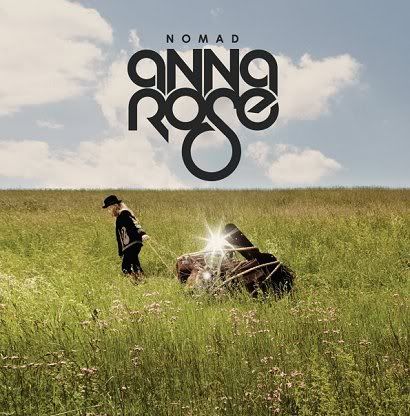
Album Review: Anna Rose - Nomad

After previewing some of its songs last year on an auspicious EP, 25-year-old singer/songwriter Anna Rose has returned with her full-length debut, Nomad. Engaging progressive rock's sprawling sonic realms along with folk's gentler sensibilities, she delivers performances on it that reveal more depth with each listen.
 

It’s the work of an earnest and promising artist who clearly invests her songwriting with a great deal of consideration. And while it's not rare for artists to be shaped to some extent by those closest or in some way significant to them, Anna Rose brings a unique perspective to her craft. Her father is Oscar-winning musician Alan Menken, who has composed for such Disney films as The Little Mermaid and Aladdin. Her executive producer is Bruce Botnick, a family friend whose extensive studio credits include such perennial rock classics as The Doors' L.A. Woman and Love’s Forever Changes. While she's made Nomad more in tune with Botnick's classic-rock credentials than of her father's more-mainstream aesthetic, Anna Rose reflects an undeniable influence from having grown up in and around such a fertile musical environment. 

Her voice is lucid and stirring—sounding almost like a cross between Maria McKee and Alanis Morissette without the angst—as she holds her own amid guitar-anchored tracks like "In The Morning View" and "Picture" in ways that suggest she's got a reserve of raw power if she ever feels the need to wail. She refrains for the most part here, though, but it suits the music's spacious, often contemplative dimensions.
 

"Overtone" is riveting, its spectral progression underscoring a gorgeous vocal that finds this young woman at her most tender and emotionally timid. "And you look the way I always pictured," she sings, "And I can't move from where I stand." With its persistent, shifty groove, "Whispers" draws on a similar premise though remains ever so discreet.
 

As suggested by its title, Nomad is lyrically informed by themes of impermanence and, in some cases, doubt—certain moments, like the self-scrutiny relayed in "Gillian" and the brassy, tongue-in-cheek blues of "I'll Be Gone," speak more transparently than others—with Anna Rose betraying a restless spirit and an open, compassionate heart. These are the sorts of replenishing topics and thoughts that are sure to sustain and inspire her songwriting down the road and, with Nomad, she begins her journey on solid ground.


November 01, 2009

An Interview with Haroula Rose

There’s a disarming sense of purpose about Haroula Rose, a humble assurance that comes through in her songs as much as it does in her desire to share them with others. “I’m proud of it,” she says of Someday, her indie-folk debut EP from earlier this year. “I’m happy when people like it.”

The singer/songwriter has reason to feel encouraged—as the five-track, acoustic-based set is an inspiring first step for what lay ahead—and listeners have good reason to enjoy her creation.

She recently traveled from her home in Los Angeles to Athens, Georgia, where she worked with noted producer/engineer Andy LeMaster (Conor Oberst, Azure Ray) on her forthcoming LP, due out in early 2010. Before she departed, Haroula Rose reflected on her emergence as an artist thus far as well as the qualities she most appreciates in music.

Did you always know you wanted to be a professional musician?

On some level I knew, but didn’t feel necessarily bold enough to go for it until [I had] enough experience to be able to tell stories and be able to offer something. I’ve always loved music and I’ve always been a singer and I was in a couple different bands, a cappella groups and choirs, but I never knew it was exactly what I wanted to do full-time until [in] the past couple years. I haven’t looked back, really. And that’s what indicated to me that I was doing the right thing. Because once I decided on it, things just sort of started to work in a way that, with anything else, it didn’t feel natural or right.

Who did you work with on the EP?

The guy who produced and engineered it was Michael Starr… I remember talking to a couple different people who were more pop-oriented or [who] wanted more control over the songs. With him I never felt that way. It was just like, “Okay, what do you want? And how can we achieve that?” And it was really nice to work with someone like that. It taught me a lot about that process. 


To be in charge of your own creation.

Yeah. I’ve heard from other artists and all kinds of advice from people say, “Make sure you speak up.” Because sometimes it’s easy for other people to start to take ownership of what they’re investing in, but it’s still you and it’s your song and you wrote it. So make sure you feel comfortable with whomever it is you’re working with to say exactly what you want and try to know that as much as you can… That being said, it was fun to work spontaneously to see what [would] happen too, because there are always moments where something might happen that you don’t expect. And then that ends up adding a whole other element. That’s fun too. Like, for instance, the piano was actually slightly out of tune on a couple of the songs and normally that would be something that could stress you out. But then I was like, “You know what? I like the way that sounds.” It kind of gives it this old saloon type of 1890’s feel. And so I thought, Let’s just go for that because I think it adds a nice element to the song overall, like this piece of nostalgia or whimsy that I don’t think you’d have if everything was perfectly in sync.

Then it would sound too polished.


The stuff that I’m normally drawn to isn’t really perfect and the people that I find the most inspiring don’t necessarily sing everything perfectly. There’re some flaws in it. And I think that makes it more human and I enjoy that so much more. Like when I hear someone like Nick Drake or… Tom Waits is a good example. I don’t think they’re concerned with the most perfect performance; it’s just the most human performance.

Are any of the songs on the EP going to be on the LP?


“Love Will Follow” and “The Leaving Song” are both going to be on the LP. We may not necessarily re-record both of them, but add other elements to what’s already there. “The Leaving Song” has a smoother, gentler feel right now. Part of me wants to sing it in a more playful or rambunctious kind of way. That might be interesting to try out, but I’m not necessarily committed to that. But it’d be nice to try. People tend to like those two songs a lot.

Love Will Follow” is my favorite on the EP.

I love that song; it came from a pretty personal place. Sometimes the people you want to help the most are the ones who don’t want your help at all, even though they may be the ones you want to reach. And so, that’s where it came from. In terms of the process of songwriting, the ones that come easiest to me are the ones that people seem to be most drawn to. I don’t know what that is, but my theory is that it comes from a really natural, honest place.

Like a universal truth.


Right. I remember sitting at my kitchen table and writing that song in about four minutes. It just sort of came to me. It was as though something was speaking to me inside my head and I was just writing it all down longhand [and] playing the guitar… A lot of people say that’s their favorite and I’m really happy when I hear that because it feels like an honest place where it came from that speaks to people. And that’s just about the greatest feeling when they say, “That song made me cry,” or “I listen to that over and over and it makes me feel better about things.” That makes me want to cry because that’s the best feeling in the world. That’s what a song should do.

January 27, 2009

Album Review: Dar Williams - Promised Land

I’ve always had a soft spot for descriptive lyrics, especially the kind that yield esoteric insights or observations yet resonate in universal and often strikingly personal ways. Considering this, I really should’ve caught on to Dar Williams a long time ago.

It’s not like I’d been unaware of the singer/songwriter’s music altogether. I’d heard bits and pieces over the years, but mostly on tracks written by other artists. Her cosmic, quirky cover of David Bowie’s “Starman,” for instance, initially piqued my interest, much like her duet with Ani DiFranco on Pink Floyd’s “Comfortably Numb” did a few years later.

Yet it was her rendition of “You Won’t See Me,” from This Bird Has Flown: A 40th Anniversary Tribute To The Beatles’ Rubber Soul, which intrigued me the most, with her unassuming vocal and loyalty to the lyric’s point of view belying any trace of irony or artifice.

And so it was a burgeoning curiosity that invariably led me to Williams’ most recent album, Promised Land. Invested with picturesque and pensive narratives on the human condition, it’s a beautifully stirring work. Moreover, Williams doesn’t forsake a good (memorable) melody to tell a story here, but rather she crafts a balance between her words and music. From the feisty opener, “It’s Alright,” through more tempered (though no less engaging) tracks like “The Easy Way” and “Troubled Times,” she reflects a storyteller’s perceptions, enriching tales of emotional hurdles and lessons with empathy in her voice.

Williams is at her most affecting, though, when she leans toward introspection. As in “You Are Everyone,” which finds her remembering an old flame who still weighs heavy on her heart, conceding as if in a soliloquy, “You are everyone I ever trusted/ Who never made a fool out of me.” As well, on “The Business of Things,” she achingly resists the apathy (if not the cruelty) she sees others purveying—“It’s the way things are done,” she concludes in dismay—by the strength and will of her own compassion. In both cases, Williams taps into such unguarded, unnervingly honest thoughts and feelings—and marries them to equally poignant music—in such a way that makes the listener feel viscerally connected.

Perhaps such is the hallmark of all great songwriters, but Dar Williams has nonetheless made that kind of impression on me with Promised Land, making me now want to work my way backwards through her catalog to discover more of what I’ve been missing.


June 24, 2008

Album Review: Jessie Baylin - Firesight

If you heard her playing in some downtown music club, you’d have a hard time believing that Jessie Baylin is only 24. Her honey-soaked voice and melancholic inflections impart maturity beyond her years, underscoring why her new album, Firesight, resonates with such warmth. On this, the New Jersey native’s major-label debut, the music yields a mélange of styles to include elements of folk, soul, and, at its best, jazz.

Baylin fares particularly well on “I’ll Cry For The Both Of Us,” “Leave Your Mark,” and the piano-laden strains of “Lonely Heaven,” all of which accentuate her vocal versatility to poignant effect. Firesight is an eclectic, ambitious effort that should not only serve as a foundation for this promising young artist but also as encouragement for her to further explore her creativeness.


July 10, 2007

Album Review: Anjani - Blue Alert

Originally released in 2006 on one disc, this 2007 reissue of Blue Alert comes with a bonus DVD that features intuitive interview footage with Anjani and the album’s lyricist and producer, Leonard Cohen.

As an album, Blue Alert resonates with sensual warmth, blending Anjani's fluid feminine voice with Cohen’s sagacious lyrics. Anjani's sultry inflections accentuate the album's adult observations on intimacy, love, and remorse. Illustrating Cohen's legendary clout with language, Anjani shines, most notably on "Never Got To Love You," which, in part, says, “The memories come back empty/Like their batteries are low/It feels like you just left me/Tho’ it happened years ago”. The album, as a whole, offers a plethora of equally crafted lines and phrasings.


The accompanying DVD features a mini-documentary, “The Making of Blue Alert,” which more than compensates for any additional cost of this reissued 2-disc set. Directed by Lian Lunson, who also directed the feature-length documentary, Leonard Cohen: I’m Your Man, this short film includes insightful commentary by both Anjani and Cohen. While Anjani’s recordings are highlighted and discussed, Leonard Cohen’s lyrics underscore the entire endeavor. Thus, it’s Cohen’s observations on the album that seem the most pertinent and, given his stature, most valuable. Two brilliantly shot music videos, for “The Mist” and “Thanks For The Dance,” round out this impressive bonus disc.

While the bonus disc provides worthwhile insight into the making of Blue Alert, it’s the balance of lyrics and music on the album that ultimately shines brightest. And given Anjani's impeccable vocal delivery, this album deserves its own suite in Leonard Cohen's tower of song.