Showing posts with label rock music. Show all posts

October 03, 2026

Silver Linings and Second Chances: An Interview with Jordan Galland


Jordan Galland is a creature of collaboration. For more than two decades, the New York City-based singer/songwriter and filmmaker forged a multifaceted career by synthesizing his creative gifts with those of other talents. He played and recorded with such artists as Cibo Matto, Sean Lennon, and Mark Ronson. He wrote and directed 2009’s Rosencrantz and Guildenstern are Undead and 2015’s Ava’s Possessions, working with a cast and crew numbering upwards of a hundred on each production. 

Yet with his forthcoming LP No Rockstars (set for release October 13), Galland, 46, goes it alone, having composed, played, sang, and produced all the album’s eight songs.  

Sonically minimalist à la edgy memoir rock and folk, No Rockstars embraces moments of nostalgia, aging and the passage of time, pensive self-reflection—“I shoulda seen it coming but I treated it like it was nothing,” Galland sings on “It Snuck Up”—and grief. “Trevor Wilson,” in particular, pays posthumous tribute to someone who to millions of Pearl Jam fans is remembered as the adolescent boy in the band’s 1992 video to its smash hit “Jeremy” while to Galland was a childhood friend. Elsewhere are songs with touching depictions of personal resilience, irresistible romance, and bittersweet second chances.


You’ve called No Rockstars your most personal album yet. What compelled you to get so personal and transparent?

Somewhere along the way in the last seven years, there was COVID. I had had a kid; I became a dad.... I hadn’t played live in a very long time, and I didn’t have any new material, really, other than a few singles I put out over the last years.... I got invited to play a few songs at a sort of poetry reading where they wanted musicians as well.... So, I did it and it kind of got me playing live but playing solo. One of the things that occurred to me when I started doing that again—and I just sort of took every opportunity that came along—was playing solo frequently, having to arrange songs, making sure that the dynamics are there and you’re playing well and singing well, putting together a show without older, more experienced or sometimes younger, better musicians propping me up and making it feel really good: I had to do that on my own. I think something about that put me into writing all these new songs, and I wrote 16 new songs. I think it had a lot to do with shedding this light on the areas of myself that [I] had been hiding behind other musicians or, like as a filmmaker, you’re sort of hiding behind the expertise of lots of other talented people. When you’re playing alone on stage, there’s just nowhere to hide. 


Does being a filmmaker inform your approach as a songwriter? 

In a funny way I would almost say that being a songwriter helps inform my writing of a script or editing a film. In a sense they feed each other. It’s just getting back to the musicality inside yourself and not being too prescriptive. I want this to be this thing and then writing it, but actually discovering it as you write it, letting it be the tool by which you get to know yourself. It sounds very spiritual or self-healthy, but that was kind of what I was discovering about this process. What’s great about what I learned from making movies, in a sense, was the pressure cooker of how to get audience feedback or producer notes and all kind of annoying notes that you feel like are criticizing you and have a healthy relationship with that and let it inform how to interpret it, digest it, and let you make the piece better. So, when I’m playing, when I’m writing a song now, I think about that. 


On the album, did you ever surprise yourself with anything you wrote?

Almost every time. That was the joy of writing these songs, knowing that a surprise would come even when it felt like it wouldn’t. For instance, a song like “The Sequel to My Life” was the first of those songs I wrote but it almost didn’t make it onto the record, but it was the final song that I finished. And by then I was like, Wait, this is maybe my favorite song on here. So, in that sense it was a surprise the whole way through, but there was a point at which I was like, Oh, man this song is just a bummer. I was proud of it once, but now I don’t know.


It’s not an altogether weary song. There’s a silver lining. 

Right, yeah, and it’s funny because sometimes you can forget. You’re in one part of the song and you forget that there’s this other part that is the redemption.


That’s the silver lining.

Yeah and initially, for instance, that song was kind of making fun of sequel culture, the phenomenon of spin-offs and franchises. I would lean heavily into that because it got very fun for me in a kind of clever way, but it was missing, I guess, the soul. So, that was part of it too. With these songs, things that I think I would have thought were clever when I was younger I was now trying to be open to being vulnerable without being clever.


In trying to be yourself and not necessarily trying to be clever, did the process—especially lyrically—come easy for you or was it a slog?

One of the things that happens when you’re patient with the song—because it can feel like it’s not coming quickly—you’re definitely rewarded with a way in which the puzzle starts to come together. There have been a handful of songs I’ve written that have come to me in the middle of the night and I woke up and wrote them down and people liked them. And I was like, Oh, wow, that was a moment. It all kind of came together at once even if I tweaked things later, but for the most part there’s a collage quality to it where I jot ideas down and then combine them with other ideas. I know a lot of songwriters that work this way when they’re working on something personal. If I work with a songwriter and a singer or something it’s rarely like that. It’s usually like you write it all in one session, but when you’re writing something for yourself, you have the luxury of months and months [going] by, and you can revisit it. 

There’s something I wanted to say, because you said, “Is it a slog?” There are so many songwriters that I admire from Leonard Cohen—the pinnacle of it—to Adam Green, who’s a friend of mine and a contemporary and he’s very successful in many ways and he inspires me. All of them, if you hear them talk about music or why they do it, they have this sort of clarity around it even if there’s still a mystery. I always envied what that was, to know why you’re writing, what you’re going for, how it might be resonating with your audience. I was always just like, I don’t know. I’m just sitting down and eventually if I work hard enough the song comes and I don’t know why I’m doing it other than it’s fun and it’s a break from the stress of life. But this time around I think it’s because I really did it alone, because I didn’t have anyone I could blame or anyone to help me make it better without having to do that extra work. I had this feeling of sitting there writing songs over and over, not getting to the end, not being happy, but knowing there was something very healing about doing this process. It’s gonna sound highfalutin maybe, but I really I felt like I discovered a way to articulate why it was important to me: Writing a song is like taking trauma and turning it into something graceful. You can experience that. And so, the act of writing a song—and I’m not religious—felt more like prayer. I’m going to go into this place and sit here and repeat these things over and over with the faith that it will become something, even if it doesn’t happen tonight or tomorrow. That was a whole new thing for me. It made me reflect on what I’ve been doing in the past that was similar to that without knowing it and what I’ve been doing in the past that was maybe completely misguided or for the wrong reasons and why it didn’t feel good.


In the title song there are moments where you almost seem to be lamenting the fact that you stepped into this solo spotlight, but there also there are moments where you seem resigned to it.

Something unexpected happened, which was I just realized it was lonelier than I remembered. When you have a wife and kid, there’s always part of you [where] you’re always wishing you were with them. My wife wouldn’t come to shows, she’d stay home with our daughter. And so, I’d go and play and then I’d be alone. I felt it very deeply. I’d be proud of myself for doing it, but I would feel depressed. It was a nostalgic sort of depression, and that’s what made me think of some of those lines in that song. The title lyric just came to me one day from fiddling around and I was like, Oh, this is a little bit of an answer. It’s got some humor to it. It’s a little self-deprecating and—


Like the lyric, “No one’s gonna write our memoir...” 

Yeah. I had just been to a friend’s release party for his memoir, and that’s when I started to [realize] this could be a song about this very real experience. My daughter had essentially grown out of her stroller, and I was using it to bring my guitar and amp to the shows—when I could walk there. It was fun; it was like a weird bohemian fantasy. I’m just walking and it’s a little adventure, but then people started to take notice. They thought it was funny or cute or silly or whatever, but it was sort of memorable to some people. That’s when I was like, oh, that’s part of this story. But there’s a sadness to it, there’s a loneliness to it and then there’s also a kind of a liberation to it. 


“It Snuck Up” is a love song on its face but there’s a lyric in it where you sing, “who we became versus who we thought we’d be.” There’s more going on lyrically than what’s on the surface of this song and, for that matter, of the album as a whole. When you were writing it did you intend for such layers in these songs?

I felt like I was discovering it as I went along. I said earlier I was using the songs as a mode of self-discovery, but I think that in the past I would have shied away from certain things that might, for lack of a better word, bum people out too much. I know that when I was younger I really gravitated towards creating a fun, sexy kind of witty persona in the songs, but this time around it was almost like the mask was coming off. I mean, there’s always some level of artifice in making anything, but sharing this sort of heaviness of some of these ideas of the passage of time and grief and disappointment and rejection would actually be a way of connecting and maybe making a listener feel connected to it in a deeper way than just writing something that they could escape into like some of my younger fantasy-type songs. And so, that’s what I did.


That makes sense.

I definitely did it with a bit of trepidation at first. That was why it was important to play every song live at least once, to not just be in the bubble of a studio situation. It was my home studio, basically my kitchen, but you can be in a bubble where you’re in your own fantasy. But if you play it for people, especially in kind of an unsexy environment like a bookstore or a place where the lighting doesn’t transport you and people aren’t automatically being quiet... If you play it in that circumstance, you really have a sense of how sharp the knife is that you’re cutting with, or how dull it is, because there’s a lot to cut through and to connect with. That’s part of it. Then I guess I just welcomed the more real and the more, I don't know, not disturbing. I wasn’t going for disturbing songs. 


Tell me about the song “Trevor Wilson.” Why was it important for you to write a song about your late friend?

First of all, it was a strange experience to have a friend like him so young. We’re talking kindergarten to fifth grade. It’s partly that we were sort of neighbors. We both went to this school in Manhattan.... It was the ’80s, [our school] was uptown and him and I lived downtown. And so, we would see each other; we were the kids that lived downtown. He was an actor and that was fascinating to me. First, second grade, he’d come and tell us about audition stuff. He was a little older than me. He became famous very quickly. He was the first person I knew like that. We were 12 years old when he starred in the “Jeremy” video. It came out of the blue. I mean, it was summer vacation. I didn’t know—I just didn’t talk to my friends on summer vacation—and then he was in this video.... [Then] Eddie Vedder took Trevor on stage at the MTV Video [Music] Awards, which even more than the video itself made Trevor a celebrity.... Fifth grade started and he wasn’t in class with me—he was in L.A.—and I felt really sad. And so, we just sort of drifted apart. Then he came back to New York [when we were 13] and I partied with him. One of the first times I went out to a nightclub was with him and he had all this attention. It was very strange. He had changed so much. Then we drifted apart [again].

I ran into him once actually when I had a band and I was sort of at the height of my thing. We were in some Italian restaurant, and I looked over at this guy. He had gone bald way before me. We were in our 20s. We talked, and he was a lawyer. He was just like, “Yeah, I stopped acting. I didn’t want to do that.” He kind of briefly told me some stuff that I later read about in an interview. But he was just like, “Becoming famous was bad.” Then we had a couple Facebook interactions, and he remembered [from childhood, playing with] G.I. Joe’s in the microwave. We set off the fire alarm, crazy. The whole place smelled toxic, plastic. And then we just, you know, drifted apart [yet again]. Then I got this notification from my mom; it said he had passed away almost 10 years before and I didn’t know. 

Frankly, that was a song where I was like, I don’t know if I can do this. but I started reading some interviews with him and then he was just on my mind nonstop. And so, I felt like to honor him with a song, and it weirdly fits some of the themes in the No Rockstars stuff. I didn’t want to exploit the memory, but once I wrote this the rhymes just sort of came together. The first verse, “His name was Trevor / And he was on MTV with Eddie Vedder.” I was like, Wait, I have to see if this works. There’s something here. When you’re writing a song about somebody that’s passed away, you really feel like you’re communing with them. You feel like you’re spending some deep time with them somehow.


Circling back to what you were saying about the passage of time, did writing about it for this album give you any new or different insight on how to cope with it?

I do feel more at peace with certain things. It made me feel very lucky to be able to make music ... the first time I’ve done it entirely on my own. I would send [or] I would play the songs for different old bandmates and occasionally—not all of them—and get their reaction. And one friend—one of my old collaborators—wrote back and said to me, “You should feel lucky that you can put all this into a song and that you don’t toil away without being able to express it.” It’s called a record, and I feel like when you do create a record of your feelings it’s so cathartic you do feel a little bit like you can step away from it. The other thing I’ll say to finish that thought is a weight does feel slightly lifted—not the full weight, but some of it. 


In what sense?

It occurs to me it’s almost like a sacrifice. This was weighing so heavily on me, and I gave it my full attention. Now there’s this thing that exists that can be shared and dedicated to these heavy feelings and so I don’t have to feel as crushed by it. The other thing that’s interesting is, since we’re all getting older, anything we create I think of as like a gesture to our future self. I do feel that with songs, especially, I’m very grateful to my past self for writing certain songs that I can still play. And so, there is part of that where I’m like, Okay, these songs are here. I can play them. If I never write songs again like these, there’s a way in which I feel at ease that there’s something that I feel is worthwhile playing that’s mine. Leonard Cohen, for instance, wrote enough songs, I could sing those forever and be perfectly happy on a desert island. But it’s a different feeling when you write a song.


Photos by Karla Moheno


July 31, 2012

An Interview with Nona Hendryx


Nona Hendryx has never been one to play it safe.

In fact, the avant-garde icon has spent nearly the past half-century pushing boundaries and other people's buttons; whether as a founding member of funk/soul pioneers LaBelle (“Lady Marmalade”), a backing vocalist for a host of progressive artists (Talking Heads, Yoko Ono, Alice Cooper), or an innovative singer/songwriter in her own right.

On her first solo effort in 20 years and inaugural release on Righteous Babe Records, Mutatis Mutandis (Latin for “changing those things which need to be changed”), Hendryx riffs on various sociopolitical ills and issues that have weighed on her mind particularly in the post-9/11 era. Boasting old-school yet urgent rhythms and brash, edgy guitars, the album's music is as fearless as its message.

You’ve always been known for being bold in your artistry and vocal in your advocacy, but were you at all reluctant about saying what you say on this album?

No, not at all. I didn’t even think about it. I was going to say, “I didn’t think twice,” but I didn’t even think once. What came out was what I was feeling and thinking and wanting to share with other people, [from] having conversations and things I’d been reading over time, and just reflecting on [matters] from the World Trade Center, 9/11 to the Iraq War, the Afghanistan War, the whole situation in the Middle East, Hurricane Katrina and how America responded to that, Barack Obama running for president, the rise of the Tea Party, the violence in America.

For all the goodwill Obama galvanized around the world and specifically in America before he was president, his election seemed to drum up the worst in some people.

He did nothing but run and campaign to be president, and that was his crime to some people, like, “How dare he have that assumption that an African American could be a leader of this country?” The racism and bigotry in America, it’s a small minority of people but they’re very vocal and very powerful. And part of their bigotry and racism is about holding onto power more so than actually hating or disliking people of color. The people who hate and dislike people of color are not the powerful. The powerful are bigots because they want to maintain control, and they use that power to stir those who have lesser power and lesser means to help support their beliefs and their bigotry.

How do you reconcile the idea that to those who share your views you’re basically speaking to the choir, but that those who don’t may not want to listen to what you have to say?

That’s part of it. That’s part of the conversation, which is why I put this out there. The conversation needs to continue; it needs to be had. I can’t change or help or try to influence change by going to the opposite corner and not coming out if there’s a disagreement. And whether they agree with me or disagree with me, the conversation needs to be had. Actions still need to be taken. We need to go back and forth and try to come to some understanding. Some of my understanding might be reshaped by engaging someone who’s coming from a different point of view. If someone is going to be so recalcitrant that they’re not going to want to hear what I have to say or what you have to say or the opposite side, then we know we have a clear problem that cannot be changed by conversation. And we’d have to find another way of doing it.

There's a song on the album called “The Ballad of Rush Limbaugh.” To play devil’s advocate, one could say there’s an epidemic of people like him — you can scarcely find someone of left-leaning politics with a radio show these days — so, why did you write a song about Limbaugh in particular?

In particular, he pissed me off. What really brought that song out of me was his response to the relief effort in Haiti. I was angry and I needed to release that anger and I needed to be able to share the hypocrisy that he is with others. He is such a hypocrite, and he obviously is still addled by the drugs he’s taking that he cannot see the truth of who he is. He is so power-mad that he will do anything to maintain and even fuel his addiction for power over people who are willingly or unwillingly following him.

The thing he said about Haiti—

He equated Americans donating toward relief efforts to paying taxes, right?

Yes. It was in the wake of one of the most horrific earthquakes in a place that was already a disaster. I just thought, “How cruel and insane.” He’s insane. If we lived in probably a different society he would be removed for his own protection and ours.

What was your reasoning for including “Strange Fruit” among the album’s other songs that you’d written yourself?

A couple years ago, after Barack Obama started running for president and actually won the nomination, there were these incidents of nooses being hung in different places in certain cities in America. It just brought back that painful memory of lynchings and hangings, and the students and Freedom Riders who were hung in the South. It just brought that back, and it was very painful.

There’s a synthesis of musical styles on the album, echoes of Curtis Mayfield and Marvin Gaye and Sly and the Family Stone, but also of The Who and the Rolling Stones. Did you have any objective in making the album as far as how you wanted it to sound?

Not really so thought-out. It just really is how musically I am — where my ear goes, where my feeling goes, and how that is then interpreted. The rhythm is really important to me, also that it has strength. Guitars are really, really a big part of what I do in terms of how I am able to express myself. And then there’s warmer colors that come from the harmonies and piano. Those things are the elements that I wanted to mold together.

And whether it has the influences of some of the people who I just think are some of the greatest musicians and writers from the last 50-60 years, then it’s part of my growing up and ... because of my appreciation for what it is that they do and my love of their music. It all comes through.

All things considered, how much hope do you realistically have for the future?

I always have great hope for the future. I do believe in the world that there is more positive than negative, and that’s how the world survives. If it ever becomes overruled by negative, then it goes off into another course. Where that leads, I don’t know, other than you have more war and more death and more destruction. But I believe that there is more positive and that we, really, as human beings are evolving slowly, but evolving.


May 09, 2012

An Interview with James 'JY' Young of Styx

“I’ll be darn,” guitarist James “JY” Young says with a chuckle when told that Styx garnered praise recently from Rolling Stone, which cited the band’s current Midwest Rock ‘N’ Roll Express tour with REO Speedwagon and Ted Nugent as among “The Ten Hottest Summer Package Tours of 2012.” “That’s a turnaround for Rolling Stone in relation to us, but who am I to disagree with them?” says Young, who has been in the band from the beginning.

Truth be told, Styx have never been critical darlings, but throughout a 40-year-career that’s withstood various personnel changes and creative conflicts, the band has sold over 30 million albums and continues to draw sold-out audiences across the country.

“In these troubled times, when you’re looking for a place to go to sort of be reminded of how great it is to be alive in a country like the United States, come on out to a Styx show and leave your troubles at the door,” Young says. “We’re all gonna be surfing away with joy by the end of the night. It’s therapeutic. It’s uplifting. And it’s just a heck of a good time.”

The concert industry can be fickle and unpredictable, but Styx has maintained a steady presence and a steady success on the road.

We have definitely asserted ourselves as a live concert act…. We’re seeing more and more young people in the audience at our shows, under the age of 25, even though the internet seems like it’s killed the record business. A lot of the record executives who used to have great power no longer even have a job. And the whole thing has been turned topsy-turvy as a result of the internet and digital downloading, and the digitization of music to CDs in the very first place. Live concerts really are the only thing that you can’t digitize in a meaningful way. There’s something about the live concert experience, when you’re sitting there with 1,000 or 10,000 or 20,000 people or 50,000 people depending on the venue and they’re all singing along to the songs. There’s an energy there that no matter what kind of stereo system you have at home—5.1, this, that, and the other thing; no matter how great the Blu-ray is—it’s just not the same as being there.

You guys made your name early on with your albums—you performed live then, too, of course, but back then albums were a dominant form of expression—but now since the tide has turned to make the live performance so crucial, you guys clearly have the chops to do that too. A lot of recording artists, once they’re expected to perform live, are lost.

We made albums starting in 1972 and then started performing live [with] that music, but it was a struggle for us for a number of years. I think those years where we had to sort of sell our new music, if you will, or at least perform new music in front of people that had never heard it before [taught us] you have to have stagecraft to bring the songs to life after you’ve recorded them. We did start [out] making records, but we weren’t that successful doing it until we’d made a few. And so we had a chance to learn what not to do before we had our first great record success, so then when we did finally have record success our stage chops were finely tuned and finely honed. The way things were in the ‘70s—in the early half of the ‘70s—there was a chance to develop.

Live concerts were very exciting for the baby boom generation because rock concerts had not been that much of a factor in the ‘60s. Once the post-baby-boom generation came into their economic powers, people wanted to go out and have a good time and rock music was their music of choice. It was the music that spoke to them. And we were there for it and we had a chance to develop without the microscope on us for a while. Then when the microscope did get on us we were ready for the closer examination that we were given.

Much of this has to do with professionalism, of course, but how do you keep the material fresh—some of these songs you play are 35-40 years old now—when you perform it live today?

Each night you’re performing in front of a different audience and you see different faces out there and different reactions, and that sort of pushes you into slightly different directions each night. There is that aspect of performing the same material over and over that it tends to just get better when you do that.

In this day and age we have the ability to put on a spectacular show from the standpoint of great sound and great lights that people can do many magical things [with] that they could never do before; and a video wall behind us that can changeably do things on a regular basis to enhance the songs and create a different energy in the room. When you have all those elements they really need to be coordinated.

The woman who directs our lights every night and the guy who runs our sound and the guy who runs our monitor mix, in particular, it’s good if they know which song is coming next and what’s going to happen in the show; because then the whole production can be tighter. And, honestly, there are times when we like changing it up and do so, but in order to put on a great production that is multimedia everybody’s got to be on the same page and everybody’s got to know when there’s a dramatic stop or a dramatic start. If the timing is off on that it’s like you wasted the moment… In order to put on a great show I think that’s what you need to do. There needs to be structure and consistency.

It must be gratifying to know that Styx has made such an indelible impact not just with music fans, but in pop culture overall.

We are so embedded in pop culture it’s amazing to me the references that surface to our music. I mean, Adam Sandler certainly had a bunch of them. There’s references to our music all over the place; [in] George Clooney’s movie, the latest one he was nominated for the Academy Award for [The Ides of March], there’s one of the female characters walking around with a Styx T-shirt. These kinds of things are stuff you can’t plan for, and just kind of happen. That just shows the impact that we’ve made. I’m astounded and humbled by it.

I’m sure there are people who know Styx songs without realizing they’re even by Styx.

Some of those people from the baby boom generation, they don’t really know Styx that well; they’re not really die-hard music fans. They’ll come out to a show and say, “I knew every one of those songs you played.” They just didn’t somehow attach them to us. So that’s kind of the beauty of us continuing to perform 120 shows a year. There’s a whole audience of people out there that actually know our music and just aren’t aware that it’s us doing it. It seems kind of crazy at this late date, but everybody’s got a different agenda for their daily lives…

Music is such a universal force that has the power to calm, to soothe, to inspire, and in the best cases to heal. And it just finds its way into people’s lives in different ways, unexpected ways. That’s the beauty of us continuing to perform, which is something I love to do.

How was the ambition Styx had as an emerging band any different or similar from what the band strives for now?

For me it was just something that appeared—on the surface anyway—as a job that you didn’t really have to work at. It was a career in the avoidance of work. That’s what it meant to be a rock star: You didn’t really have to work. But the reality is to succeed and to continue to succeed over a span of a number of decades as we have requires tremendous amounts of work and utter and total focus. 

And some days it’s a very frustrating career. You have to travel from one end of the country to the other—sometimes in the span of 48 hours. I’ve gone back and forth from the East Coast to the West Coast back to the East Coast, and that will kill an ordinary human. It definitely takes its toll on you, but that’s what it takes, in a way, to continue to succeed in this business, particularly now. I don’t know what anybody else in this band could possibly think of to do at this late date as far as another career goes. Eventually this becomes the only thing that you can earn a decent living at because it’s the only thing that you really know. 


April 04, 2012

Interview: Chris Welch, Author of Eric Clapton: The Ultimate Illustrated History

Even in his formative stages Eric Clapton was earning a rapturous, rabid following and inspiring generations of guitarists to come. “He was already a star,” says veteran music journalist and author Chris Welch. “Even then as a teenager, people were talking about Eric.”

Welch was one of them. A reporter at British music weekly Melody Maker and still a teenager himself at the time, he first chronicled Clapton as a founding member of the Yardbirds. “I went to a club in South London called the Bromel Club, just a hotel gig, very small little bar and not many people there,” Welch recalls of one such occasion. “The band were playing ‘Smokestack Lightning’ and all those songs the Yardbirds specialized in. They finished to mild applause. Eric looked quite fed up. So I went up to him and said, ‘Well, you look fed up. What’s the matter?’ And he said, ‘Oh, you noticed, did you?’ a bit sarcastically.”

The two hit it off and a friendship ensued, one which has witnessed Clapton’s many incarnations — from stints in the Yardbirds and John Mayall’s Bluesbreakers through supergroups Cream and Blind Faith to subsequent solo endeavors — as well as Welch’s journalistic career to date. Writing at Melody Maker and later NME, among other publications, he’s also penned biographies on such rock icons as Jimi Hendrix, David Bowie, Led Zeppelin, and Cream.

In his latest book, Clapton: The Ultimate Illustrated History, Welch comes full circle in a sense, surveying Clapton’s life and career while offering firsthand reflections along the way. Interspersed throughout the narrative are rare and renowned photographs along with images of vintage concert posters in kaleidoscopic brilliance and, most striking of all, the arsenal of guitars behind the music of this seminal blues-rock artist. 


In the preface of the book you write about Eric in those early days as striking you like a man on a mission, of him having a certain discipline about what he was doing. 


He always gave the impression of being more serious about what he was playing than the other guys in the band. They’d all be jumping about like school kids, really. Eric was much more focused and serious about the blues and what he wanted to do. He never felt like he quite fit in with any of the groups he was in at that point, I don’t think. He was always very restless and slightly detached from the band. 


What initially drew you to his playing? What distinguished him, even in the beginning, from the other guitarists in Britain at that time? 


Most people were still playing in the old-fashioned way, like the Shadows and groups like the Ventures in America; that kind of echoing rock ‘n’ roll guitar style, rather nervous and jerky, staccato playing. Not really steeped in the blues at all. It was only Eric, really, and a few others—there was a guy called Alexis Korner, who played [blues] guitar as well—but none of them really matched Eric’s ability. Because not only was he a just a very good guitar player; he suddenly managed to absorb the sound and real spirit of the blues. He’d been listening to records, of course—Freddie King and B.B. King—and that’s really how he learned, but miraculously he absorbed that style and sound and made it his own. 


Ray Charles said once, “I never wanted to be famous. I only wanted to be great.” Eric seems to have shared the same ethic. 


Exactly, yes, that’s true. He always found the whole pop scene very amusing. I think when Cream became successful they certainly did enjoy that fleeting, couple of years of pop fame. I mean, you couldn’t not enjoy it; it was such a good time for everybody. They wanted Cream to be a success and to be recognized, obviously, but they still wanted to do it playing their music, not compromising with the music. 


The Band’s Music From Big Pink was ultimately a catalyst for Eric to break up Cream. 

It was a big turnaround, because Cream had been locked into a corner where people expected them to be playing “Steppin’ Out” and “Toad” and lots of guitar solos at high speeds all the time every night. Eric understandably got a bit sick of being cast in that role as the superhero guitar player. He could do it, but night after night it wore a bit thin. As you say, when first he heard Music From Big Pink, he could see a different way of approaching the guitar and music, slowing down a bit, playing with a bit more relaxed feel. I remember he actually played me the album while I was interviewing him. He had a flat in Chelsea. And that’s when he was telling me Cream were going to break up and this was the kind of music he wanted to play… [but] he said, “You can’t tell anybody yet. This is top secret.” So I had to wait for a few weeks before it was officially announced. But that was a pivotal moment, you’re right. 


Eric and Jack Bruce and the other musicians of that lot seemed not so much celebrity or fame-seeking but rather like tradesmen pursuing their craft. 


They always wanted to learn more and study their instruments…. They were a very competitive sort of people. They all came from that revivalist thing in Britain where people wanted to pick up on the best of American music and find the source and play it to the best of their ability. Rather than just being in pop music, which is totally commercialized and aimed at the charts and instant popularity and fame, these were people who were sincere about their musical ambitions. And that really was why the public would recognize that eventually and why they became so hugely successful. There was truth in what they were playing. 


They ended up being more successful than the ones seeking commercial fame. 


That’s the irony of it, isn’t it? The public at large recognized that what they were hearing was the real thing. It was sincere, important music that they were playing—well, at the start it was—whereas people could see through all the sort of instant-pop nonsense. [Laughs] They weren’t seeking success, necessarily, but somehow it was thrust upon them. 


You’ve known Eric for so long, where do you draw the line between journalism and friendship? If you catch him in a performance and he’s just not really into it, do you write that? 


Very difficult, yes. I have done it in the past. He went through a patch when he wasn’t really trying terribly hard, during the drinking period…. I remember writing a piece about him at this gig in London, which was rather critical actually. But he accepted it. There were no sort-of bitter complaints. I remember seeing him with Elton John at Wembley Stadium; that wasn’t a particularly good gig either. 


There’s a quote from Eric in your book in which he says, “I really don’t rank myself very highly in any of the fields I work in.” Do you think he acknowledges his skill? 


He once described himself to me as a musical laborer. Eric’s always been a pretty modest guy, really. It is very difficult, isn’t it, if you’re being praised to the hills and then you get knocked back by criticism? It leaves you in a confused state. But generally speaking, I would say that he’s well aware of his technical abilities as a guitar player. You don’t get that good by not working at it; and he must be satisfied with his own playing. I think what Eric has learned to do over the years, if you listen to his playing, is how to construct a solo and, [also], editing his own work. Not like those guitar players who go on forever and ever and never stop improvising endlessly, trying to baffle everybody. He’s an artist in that sense. What we’re talking about is an artist who knows how to make the best use of his talents. 


Chris Welch
Clapton: The Ultimate Illustrated History by Chris Welch is published by Voyageur Press, an imprint of MBI Publishing Company, 2011.


July 08, 2011

DVD Review: Sheryl Crow - Miles From Memphis: Live at the Pantages Theatre

On her most recent studio LP to date, last year’s 100 Miles From Memphis, Sheryl Crow set out to honor classic R&B of the late ‘60s and ‘70s by composing and covering songs ostensibly in that stylistic vein. Despite a couple standout moments, however, the album just didn't live up to its potential, drawing on genre-specific clichés like horns and gospel-tinged backing vocals more than universal conviction.

Still, a rewarding live performance can transcend even the most lackluster material; and yet, for the most part, the one documented on Miles From Memphis: Live at the Pantages Theatre does not. The set begins encouragingly enough — Crow brings plenty of charisma to the stage, and her band here is outstanding — but it soon succumbs to the same stale motifs as on the album, which informs most of the show.

In fact, she spruces up older cuts in much the same dressing — “All I Wanna Do” morphs into Marvin Gaye’s “Got To Give It Up,” the curious transition leaving little to be desired; “Strong Enough” is usurped by an awkward reggae romp, with Crow at times affecting a faux-Jamaican accent — making this soul serenade seem like either a mismatched experiment of artist and genre or, worse, a contrived one.

Thankfully a stripped-down, pensive version of “Redemption Day,” an underrated highlight of the Sheryl Crow album, along with the effervescent hit, “Soak Up The Sun,” help ensure that Miles From Memphis isn't all for naught.

In the DVD’s bonus footage — a featurette that includes a two-song soundcheck along with commentary from Crow on her band and her aspirations for this particular project — she talks about why R&B and soul music has long resonated with her, and how that appreciation ultimately inspired 100 Miles From Memphis and, consequently, this concert film. She admires legends like Curtis Mayfield and Sly & The Family Stone, she explains, because within even their funkiest, most accessible songs they voiced messages of social and political relevance. “The opportunity to go out and carry on that tradition,” Crow concludes, “for me, is not just humbling but it’s really exciting.” It’s also really presumptuous, and any such assimilation does little to help her credibility in what is an all-around missed opportunity.


April 05, 2011

Album Review: Robbie Robertson - How to Become Clairvoyant

“Everything you leave behind catches up in another time,” sings Robbie Robertson in “This is Where I Get Off,” among the more provocative tracks on his stirring new album, How to Become Clairvoyant (429 Records). 

Indeed, the music legend recalls and comes to terms with his storied past—most notably chronicling the years just preceding and following his seminal tenure as guitarist and principal songwriter in The Band—on what is his fifth solo effort.

Eric Clapton, with whom Robertson had years ago conceived much of the album’s musical foundation, appears in a number of instances, contributing vocals (as on the infectious duet, “Fear of Falling”) as well as acoustic and electric accompaniment. Further support is offered by the likes of Robert Randolph, who serves up a fiery pedal-steel solo on the rambunctious cut, “He Don't Live Here No More,” in addition to Tom Morello (guitar), Steve Winwood (organ), and Trent Reznor (sonic textures), each playing with discretion and deference to Robertson.

Which is appropriate as the album is intensely personal often to the point of sounding confessional, its songs demonstrating Robertson at his most reflective and self-aware, to which the music in general complements with soulful, groove-rich subtleties. In fact, the arrangements alone are so moving that the entire work could have comprised instrumentals—two appear, in “Madame X,” penned by Clapton, and “Tango for Django,” both fascinating compositions—and still succeeded.

That’s not to take away from the narratives, though, as Robertson delivers them like a seasoned storyteller. And while the circumstances he addresses will at times likely serve as a bone of contention for some—arguably none so much as on the aforementioned track, “This is Where I Get Off,” in which he lays out his reasons for breaking up The Band after The Last Waltz—but his rendering of them into the songs heard on How to Become Clairvoyant is as poignant and powerful as anything he has produced in his solo career.


June 13, 2010

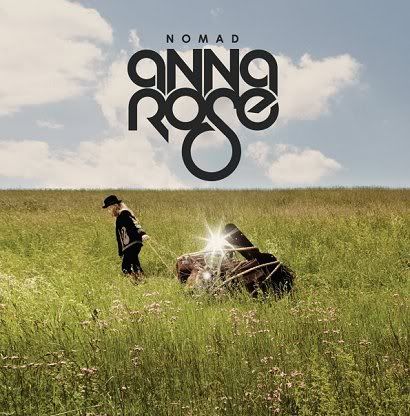
Album Review: Anna Rose - Nomad

After previewing some of its songs last year on an auspicious EP, 25-year-old singer/songwriter Anna Rose has returned with her full-length debut, Nomad. Engaging progressive rock's sprawling sonic realms along with folk's gentler sensibilities, she delivers performances on it that reveal more depth with each listen.
 

It’s the work of an earnest and promising artist who clearly invests her songwriting with a great deal of consideration. And while it's not rare for artists to be shaped to some extent by those closest or in some way significant to them, Anna Rose brings a unique perspective to her craft. Her father is Oscar-winning musician Alan Menken, who has composed for such Disney films as The Little Mermaid and Aladdin. Her executive producer is Bruce Botnick, a family friend whose extensive studio credits include such perennial rock classics as The Doors' L.A. Woman and Love’s Forever Changes. While she's made Nomad more in tune with Botnick's classic-rock credentials than of her father's more-mainstream aesthetic, Anna Rose reflects an undeniable influence from having grown up in and around such a fertile musical environment. 

Her voice is lucid and stirring—sounding almost like a cross between Maria McKee and Alanis Morissette without the angst—as she holds her own amid guitar-anchored tracks like "In The Morning View" and "Picture" in ways that suggest she's got a reserve of raw power if she ever feels the need to wail. She refrains for the most part here, though, but it suits the music's spacious, often contemplative dimensions.
 

"Overtone" is riveting, its spectral progression underscoring a gorgeous vocal that finds this young woman at her most tender and emotionally timid. "And you look the way I always pictured," she sings, "And I can't move from where I stand." With its persistent, shifty groove, "Whispers" draws on a similar premise though remains ever so discreet.
 

As suggested by its title, Nomad is lyrically informed by themes of impermanence and, in some cases, doubt—certain moments, like the self-scrutiny relayed in "Gillian" and the brassy, tongue-in-cheek blues of "I'll Be Gone," speak more transparently than others—with Anna Rose betraying a restless spirit and an open, compassionate heart. These are the sorts of replenishing topics and thoughts that are sure to sustain and inspire her songwriting down the road and, with Nomad, she begins her journey on solid ground.


May 19, 2009

Album Review: Eric Clapton and Steve Winwood - Live From Madison Square Garden

It was deemed historic before it even happened. An evening with Eric Clapton and Steve Winwood – both men legends in their own right, each man a veritable encyclopedia of rock history and influence – marked their first full-length concerts together in nearly forty years, harkening back to their fleeting brush of Blind Faith.

Chronicling their three-night stand in February 2008, Live at Madison Square Garden recalls Clapton and Winwood consummately rising to the occasion, delivering a heavy, blues-powered set of unqualified classics. From expected performances (“Can’t Find My Way Home,” “Presence of the Lord,” “Had To Cry Today”) to those less expected (Clapton with “Forever Man,” Winwood with Traffic’s “No Face, No Name, No Number”) to the ones that make your jaw drop (“Voodoo Chile,” “Them Changes,” “Little Wing”), it’s a revelatory live document. 

Consider it essential from one who was there.