Showing posts with label Billy Joel. Show all posts

January 20, 2014

And We All Enjoyed the Weekend For A Change: Billy Joel is Magnificent in Sold Out Tampa Concert


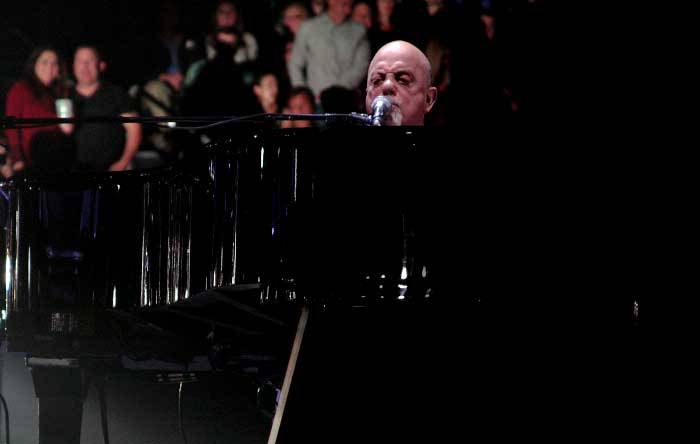
Considering that the Tampa Bay Times Forum on Friday night was packed to capacity, having sold out even behind the end stage and in the furthest rows toward the rafters, Billy Joel could’ve played it safe by simply grinding out his greatest hits. He has enough of them to choose from, of course, but Joel instead delivered a two-hour set that was heavy on rare or rarely played material. 


Even still, Joel offered up plenty of perfunctory moments—from “New York State of Mind” to “My Life” to “Allentown” to “Movin' Out (Anthony's Song)”—but it was his inclusion of several deep cuts and lesser played hits that made this a concert to remember.


The 64-year-old legend set the tone early on, beginning with the back-to-back salvo of “Miami 2017 (Seen the Lights Go Out on Broadway)” and “Pressure,” the former an unexpected opener, the latter just plain unexpected. Lest there remained any doubt as to what kind of show this was shaping up to be, Joel’s next two songs, “Sleeping with the Television On” and “Vienna,” made it gloriously apparent. 
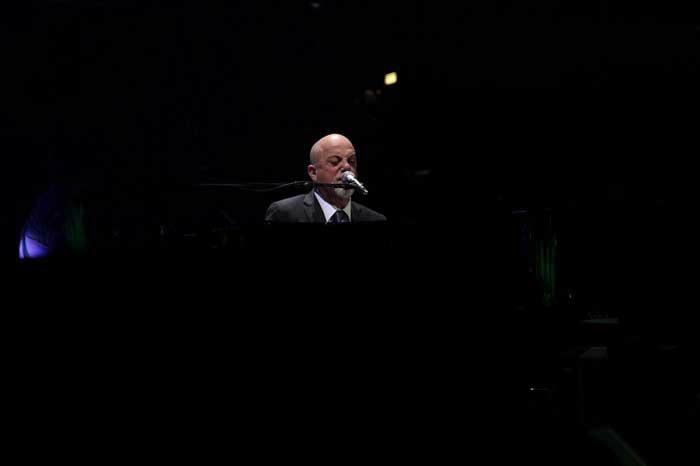


For a musician who hasn’t produced any new pop music in over two decades—his most recent such album was 1993’s River of Dreams—Joel sounded better than ever, his considerate and often soulful phrasings revealing new insights to his songcraft. Such was most notably the case when, as his crack eight-piece band stood in the shadows, Joel summoned a stunning solo version of “And So it Goes,” his rich vocal-and-piano interplay enriching the song’s melancholic mood.


After closing the main set with the night’s most anticipated yet nonetheless exhilarating sing-along in “Piano Man,” Joel returned for a raucous encore—“Big Shot,” “It's Still Rock and Roll to Me,” “You May Be Right,” “Only the Good Die Young”—properly capping off an all-around magnificent performance that not only defied expectations, but exceeded them as well.


All photos © Donald Gibson


October 26, 2007

Book Review: Making Records - The Scenes Behind The Music

Imagine yourself facing the task of telling Tony Bennett during a recording session that he’s hit a few bum notes. Not only should you have the credible acumen for identifying such flaws, but also the knowledge of how to correct them. Fortunately, Phil Ramone has an abundance of both. One of music’s most prolific and distinguished producers, he candidly shares experiences from his career in his new book, Making Records: The Scenes Behind The Music.

While neither a strict memoir nor a technical manual, the book blends elements of the two, usually within the context of representative and applicable anecdotes.

Ramone writes an engaging account of his ascension in the music industry, from working as a studio apprentice to engineering recording sessions and ultimately producing albums and live events. As a result, the reader gains priceless insight on some landmark recordings as well as perspective on the evolution of music production over the last 50 years.

What makes this book such an enjoyable read is the producer’s unassuming way of relating his memories and knowledge. One would suspect that someone as proficient and experienced as Phil Ramone would have, by now, lost all sense of wonder in regard to how music is made. Quite the contrary, while he undoubtedly knows what he’s doing in the studio, he seems just as amazed and inspired by the creative process as any typical fan would feel.

Fans of Billy Joel, in particular, will take pleasure in reading what Ramone recollects about producing many of the Piano Man’s greatest albums. He recounts how certain iconic sound effects were achieved, like the shattering glass that opens “You May Be Right” and the reverberating helicopter propellers that bookend “Goodnight Saigon.” He explains his view on what was lacking in Joel’s first four albums—which he didn’t produce—and why that deficiency resulted in releasing Songs From The Attic. He even divulges how he would humorously blackmail Joel and his band into working whenever they got hungry or distracted.

In sharing his experiences of working with Billy Joel, Barbra Streisand, Frank Sinatra, Ray Charles, and a plethora of others, the consistent factor is how Ramone approached (and still approaches) each project with the artist’s intent foremost in his mind. He astutely notes that his name doesn’t appear on the covers of the albums he produces. Thus, instead of attempting to conform an artist to a certain style or standard, he respects and caters to each artist’s creative goal.

Ramone and Billy Joel, 1986, during sessions for The Bridge
At the same time, Ramone justifiably points out the credentials that he brings to the making of an album. A classically trained musician in his own right, he understands music from both sides of the glass. Even when he has worked with artists who’ve had production experience, like Paul Simon or Paul McCartney, Ramone says that he contributed a sense of objectivity that the artists found helpful.

Accommodating in his profession as well as in his prose, Ramone has graciously written a book that music fans of any age or education can appreciate. Given his expertise, he could have easily filled these pages with professional terminology related to record production. While he certainly refers to technological aspects and specific equipment associated with his work, he does so without leaving the average reader overwhelmed or confused. Rather, he only mentions something of this sort within the context of recounting a pertinent (and understandable) experience.

Making Records: The Scenes Behind The Music offers an intriguing glimpse into the art of music production, and few careers in this field have rivaled that of Phil Ramone. Now, in addition to albums, concerts, and other live events, Ramone has once again produced a quality work. And this time, finally, his name is on the cover.


February 13, 2007

Rather Laugh With the Sinners Than Cry With the Saints: Billy Joel Live in Orlando

February 10, 2007: Amway Arena, Orlando
“It’s not about less hair,” Billy Joel commented on his increasing baldness. “It’s about more head.”

At the Amway Arena in Orlando, the Piano Man put on a solid two-and-a-half-hour show packed with classics, favorites, and his ageless New York attitude.

Starting with “Prelude/Angry Young Man,” Joel matched the briskness of the 1975 Turnstiles version note for note. With the sellout (behind the stage and all) crowd still reaching its seats, “My Life” ensured that no one would soon sit down.

In between songs, Joel thanked the fans “in the shitty seats” behind the stage and the ones sitting in the nosebleeds “in Tampa.” He said he needed the money to pay for his car insurance.

After giving the crowd a choice between “Vienna” and “Summer, Highland Falls,” he sang the latter (“Vienna,” a classic from The Stranger, rarely wins, unfortunately).

Before playing “All About Soul,” from 1993’s River of Dreams, Joel confessed that he hadn't played the song in years and if something went wrong, then it would prove the show wasn't taped. “It’ll be a real rock and roll fuck-up.” It wasn't.

The pinnacle of the concert came with a plaintive rendition of “She's Always A Woman.” Whatever it was that got that song in the setlist (Valentine’s Day looming, the fact that he’s married again), it sure felt good to hear it performed.

After strapping on an electric guitar, Joel asked the audience to listen to his drum roadie sing a “religious song.” “Give him a chance,” he said in mock sincerity as the (robust) roadie ignited the arena with a blistering version of AC/DC’s “Highway to Hell.” The sound of 18,000 people singing along to that one surely reached the heavens (or somewhere south).

The main set ended with “Big Shot,” “It’s Still Rock and Roll to Me,” and “You May Be Right,” inspiring Joel to jump around the stage with an upright microphone, leaning toward the fans in the front rows.

“Only The Good Die Young” began the encore, followed by the epic “Scenes From an Italian Restaurant.” Like always, “Piano Man” ended the evening, but not before Billy Joel offered his usual post-show advice to the audience: “Don’t take any shit from anybody!”